
1. Wind Power Transmission Overview
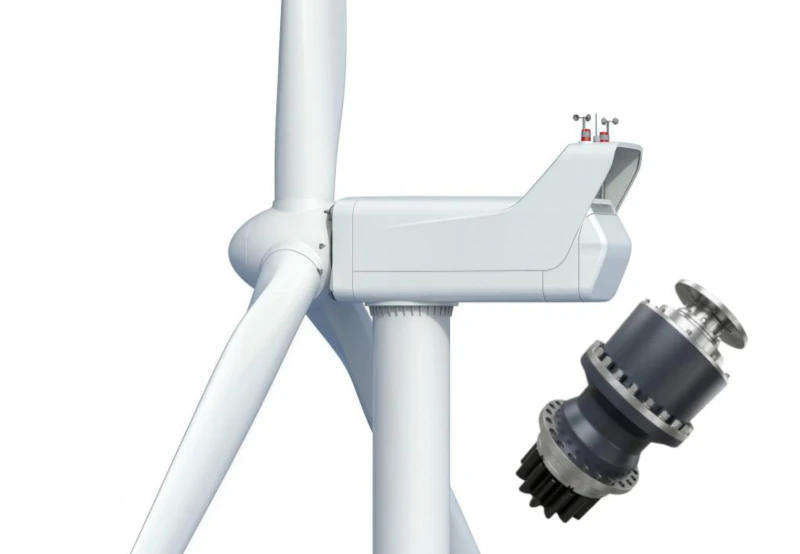
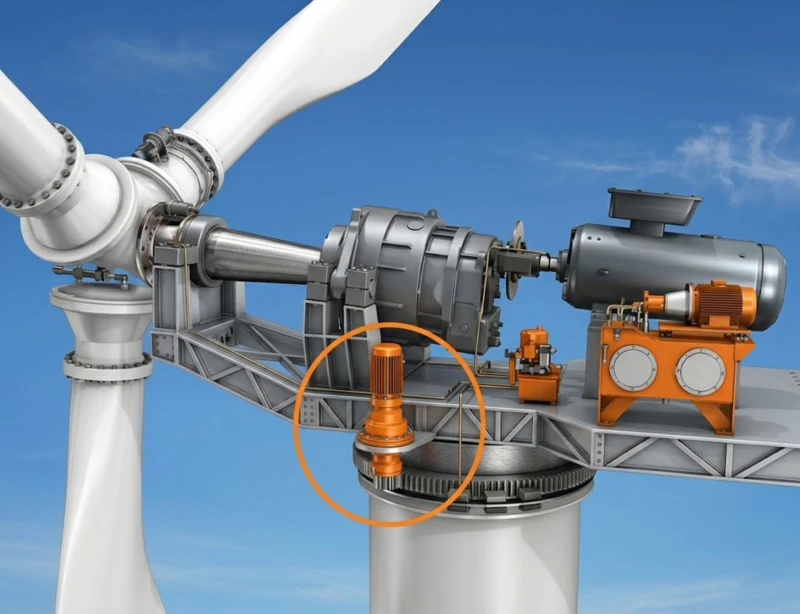
The operational efficiency and structural safety of a modern wind turbine depend heavily on its ability to adjust to constantly changing wind conditions. This requires robust mechanical drive systems situated high inside the nacelle. Specifically, the yaw drive rotates the entire nacelle to face the wind directly, while the pitch drives adjust the angle of individual blades to optimize rotational speed or feather the blades during gale-force storms. These critical adjustment mechanisms require transmission units capable of delivering massive torque output within an incredibly restricted installation space.
Because wind turbines are often installed in remote locations—ranging from isolated mountain ridges to aggressive offshore marine environments—the cost of drivetrain failure and subsequent crane maintenance is astronomically high. Our multi-stage gear reducers are engineered specifically for these harsh duty cycles. They feature heavy-duty housing materials, specialized low-temperature seals, and precision-ground gears that distribute load evenly, preventing tooth fatigue under continuous aerodynamic shock loads.
2. Standard Technical Specifications
Our wind energy transmission units are manufactured under stringent quality control protocols, ensuring compatibility with standard wind turbine control systems and high-capacity hydraulic/electric motors. The parameters below reflect our core yaw and pitch series.
| Specification Parameter | Performance Value / Range |
|---|---|
| Continuous Output Torque | 5,000 Nm to 120,000 Nm |
| Reduction Ratio (Multi-Stage) | 60:1 to 1500:1 |
| Torsional Backlash | ≤ 5 arcminutes (High precision positioning) |
| Operating Temperature Range | -40°C to +70°C (with synthetic wind-grade oil) |
| Ingress Protection Rating | IP65 / IP67 (Corrosion and salt-spray resistant) |
| Gear Material & Treatment | High-Alloy Forged Steel, Carburized and Ground |
| Brake System | Integrated Electromagnetic or Hydraulic Multi-Disc Brake |
| Output Bearing Capacity | High Radial/Axial Load Tapered Roller Bearings |
| Lubrication Method | Oil bath / Splash lubrication (Long-life interval) |
| Mounting Configuration | Flange mount with extended output pinion |
3. Kinematic Working Principle in Wind Turbines
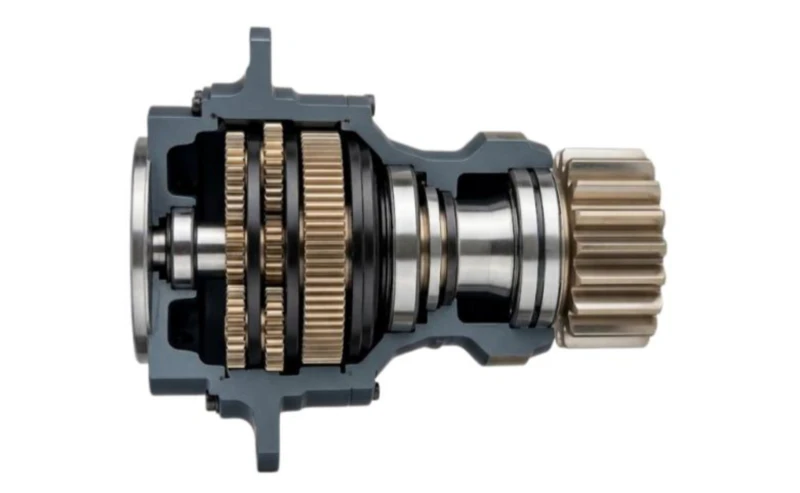
The structural resilience of a yaw or pitch gearbox is derived directly from its epicyclic gear arrangement. In wind applications, an electric or hydraulic motor inputs high-speed, low-torque rotational power into the central sun gear. This sun gear drives multiple planet gears—usually three or four—that are housed within a rotating carrier. These planet gears simultaneously mesh with a stationary outer ring gear. As the planet gears revolve inside the ring gear, they force the carrier to rotate at a significantly reduced speed, thereby exponentially multiplying the output torque.
This multi-point mesh configuration is critical for wind turbines. When a sudden gust of wind hits the massive rotor blades, it sends extreme torsional shockwaves down the blade roots and into the pitch drive mechanism. In a standard parallel-shaft gearbox, this force would concentrate on a single gear tooth, risking immediate shear failure. Our epicyclic design distributes these shock loads equally across all planet gears. This load-sharing capability prevents mechanical deformation and ensures the gears maintain a high contact ratio even under severe stress.
Furthermore, wind turbine gearboxes utilize integrated holding brakes. Once the turbine nacelle is aligned with the wind direction (yaw) or the blades are pitched to the correct aerodynamic angle, the motor stops. The fail-safe brake instantly engages, mechanically locking the gears in place. The gearbox must then function as a static holding mechanism, resisting the continuous aerodynamic forces pushing against the rotor without any internal slipping or backlash movement.
4. Global Application Scenarios
Wind farm operators globally require drivetrain components that drastically minimize unscheduled maintenance. By supplying highly engineered reduction units, we assist energy providers in maximizing turbine uptime across diverse environmental conditions.
France: Offshore Wind Farm (Saint-Nazaire Region)
An offshore wind installation off the coast of France required highly durable yaw drives to handle turbulent Atlantic winds and severe saltwater corrosion. Standard drives previously used in the area suffered from premature seal degradation, leading to saltwater entering the gear casing. We provided customized multi-stage reducers equipped with marine-grade C5-M epoxy coatings and labyrinth seal systems. Over a monitored three-year period, these specialized units effectively blocked all moisture ingress, eliminating the need for costly mid-ocean crane interventions and reducing yaw-related downtime by over 60%.
United States: Desert Wind Installations (West Texas)
A major energy contractor in Texas faced issues with pitch drive overheating during the scorching summer months. High ambient temperatures combined with continuous blade adjustments during gusty conditions caused synthetic gear oil to thin, leading to accelerated bearing wear. We engineered a replacement pitch drive series featuring an enlarged oil sump capacity and optimized internal oil flow channels. Coupled with high-temperature Viton seals, the new units managed heat dissipation far more effectively, increasing the mean time between failures (MTBF) and stabilizing turbine energy output during peak summer demand.
Denmark: North Sea Coastal Turbines
Coastal wind arrays in Denmark experience aggressive load variations due to rapidly shifting weather fronts. The utility operator required yaw drives with absolute minimal torsional backlash to prevent the heavy nacelles from shuddering violently during orientation adjustments. We supplied our precision-ground series, ensuring backlash remained under 4 arcminutes. This tight tolerance provided operators with rigid, secure positioning, entirely eliminating the dangerous structural vibrations that had previously caused micro-fractures in the turbine tower sections.
5. Interchangeable Dimensional Standards
Wind farm maintenance relies on rapid component replacement to avoid extended production losses. Our engineering team designs pitch and yaw reducers to match the exact mounting flanges, output pinion modules, and bolt-hole circles of industry-standard European configurations. This allows maintenance crews to execute direct drop-in replacements without redesigning the nacelle’s mounting plates or motor couplings.
| Turbine Application | Our Equivalent Series | Compatible Industry Replacement |
|---|---|---|
| Yaw Drive (Nacelle Rotation) | Y-Drive Series | Bonfiglioli 700T Series / Brevini Yaw Drives |
| Pitch Drive (Blade Adjustment) | P-Drive Series | Bonfiglioli 300 Series / Comer Industries PG |
| Heavy Slew Drive | SD Series | Rexroth GFB Series |
6. Integrated Solutions: Planetary Motor Assemblies
Procuring a standalone gear reducer requires subsequent alignment and mating with a separate servo or asynchronous electric motor. In the constrained environment of a wind turbine nacelle, every millimeter of axial length matters. To streamline installation and guarantee absolute shaft concentricity, we recommend our fully integrated Planetary Motor systems.
By directly mounting the motor housing to the primary gear stage flange, we eliminate the need for bulky external couplings and intermediary bell housings. This factory-aligned integration prevents parasitic side loads on the input bearings, reduces vibration, and provides a superior ingress protection seal. Furthermore, these integrated packages ensure the electromagnetic brake is perfectly tuned to the specific torque multiplier of the gearbox, ensuring reliable static holding power against severe wind gusts.
Wind energy operators and OEM turbine manufacturers looking to simplify their supply chain and ensure maximum drivetrain reliability regularly choose to purchase custom Planetary Gearbox and motor assemblies as a single, fully tested unit, thereby reducing field assembly errors and improving overall system longevity.
7. Practical Operation and Maintenance FAQ
1. How often must the gear oil in a yaw drive be replaced?
An initial break-in oil change is recommended after 500 hours to flush out micro-particles. Following this, fully synthetic wind-grade gear oil should be changed every 3 to 5 years, depending on oil sampling analysis results.
2. Can these pitch drives operate safely in sub-zero winter climates?
Yes. For cold climate installations, we equip the gearboxes with specialized NBR or FKM seals designed to maintain flexibility down to -40°C, preventing oil leakage during cold starts.
3. Why is holding torque just as important as driving torque in wind applications?
Once the nacelle is facing the wind, the yaw drive motor shuts off. The gearbox and its integrated brake must mechanically lock the nacelle in place, holding steady against massive, continuous aerodynamic pushing forces without slipping.
4. What causes gear pitting in turbine drives, and how is it prevented?
Pitting is caused by surface fatigue from high localized stress. We prevent this by deep case-carburizing our alloy gears, ensuring a hardened outer shell (HRC 58-62) while maintaining a ductile core to absorb shock impacts.
5. Are custom output pinions available to match older turbine slew rings?
Yes, we can machine the extended output shaft and pinion gear to match the specific module, tooth count, and pressure angle of your existing turbine turntable bearings.
6. How is torsional backlash managed in your yaw reducers?
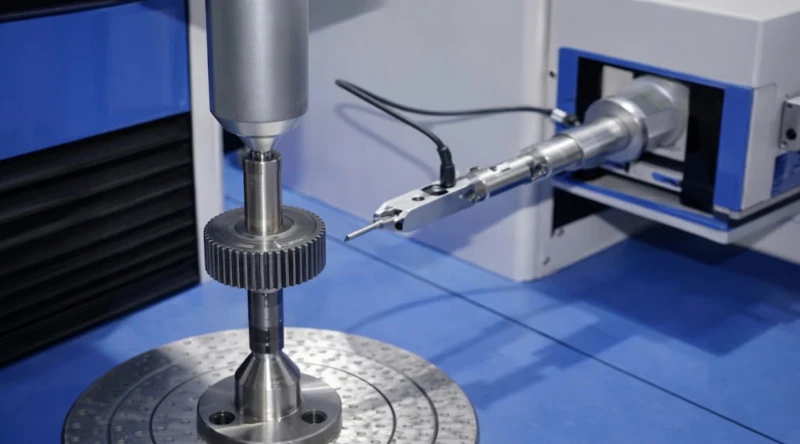
We minimize backlash to under 5 arcminutes through strict CNC precision grinding of the planetary gear profiles, ensuring tight engagement and preventing the nacelle from swaying violently during wind shifts.
7. What protection is used against offshore saltwater corrosion?
For offshore wind turbines, external housings undergo specialized sandblasting followed by multiple layers of C5-M marine-grade epoxy coatings, combined with labyrinth seals to block salt spray.
8. Do the gearboxes require external cooling systems?
Yaw and pitch drives generally operate intermittently, allowing for natural convection cooling within the nacelle. External oil cooling loops are rarely required unless specified for extreme high-temperature environments.
9. What information is required to order a direct replacement unit?
To accurately quote a replacement, we need the original manufacturer’s part number, the required gear ratio, motor input flange dimensions, and the output pinion specifications.
10. How can wind farm operators secure volume components for fleet overhauls?
To discuss volume discounting, bulk shipping logistics, or to order wholesale Planetary Gearbox components for your upcoming maintenance schedules, please connect with our technical sales engineers directly.