
1. Core Application Overview
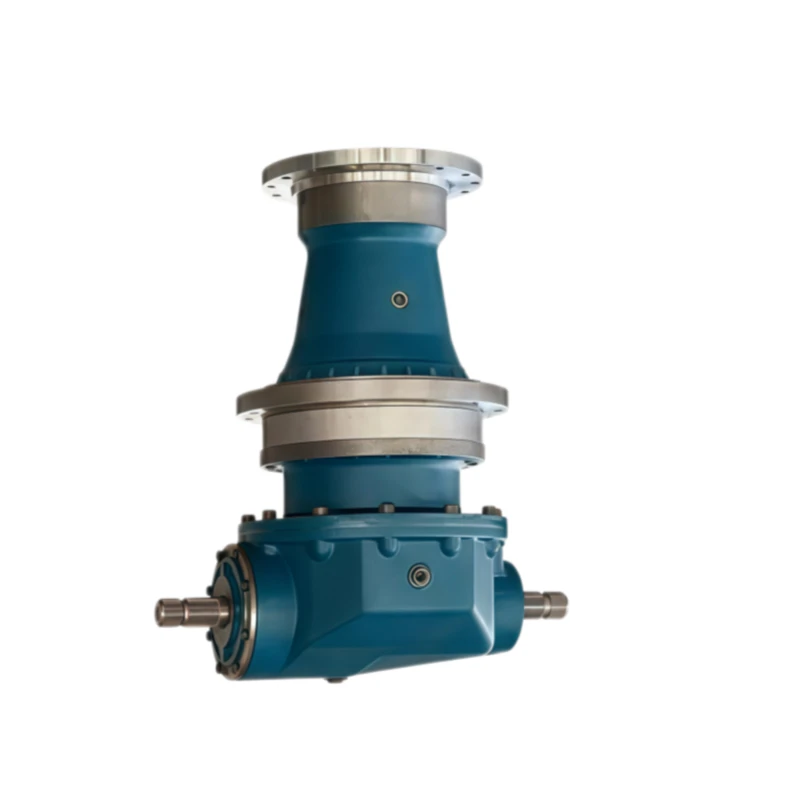
Total Mixed Ration (TMR) feeding systems are the foundation of modern livestock nutrition management. Vertical TMR mixers rely on a massive central auger to chop, blend, and distribute tough forage, hay bales, and concentrates. Driving this vertical auger requires a transmission system capable of converting high-speed input from a tractor into low-speed, extreme-torque rotation while supporting the immense downward axial load of the feed and the auger itself.
The planetary gearbox is engineered exactly for this brutal environment. By utilizing an epicyclic gear arrangement, these reducers distribute rotational stress across multiple gear teeth simultaneously. This prevents the catastrophic mechanical failures common in standard parallel-shaft gearboxes when processing dense, wet silage or frozen round bales. The compact, vertical footprint of the planetary drive integrates perfectly under the mixing tub, ensuring optimal ground clearance and a streamlined drivetrain geometry.
2. Standard Technical Specifications
Our agricultural transmission units are machined to precise tolerances to guarantee reliable performance across various mixer capacities, from compact 5m³ single-auger units to massive 45m³ triple-auger configurations.
| Technical Parameter | Specification Range / Detail |
|---|---|
| Continuous Output Torque | 15,000 Nm – 120,000 Nm |
| Standard Gear Ratios | 14:1, 18:1, 24:1, 35:1 (Custom available) |
| Nominal Input Speed | 540 RPM or 1000 RPM (Tractor PTO standard) |
| Maximum Axial Load Capacity | Up to 350,000 N (Thrust bearings incorporated) |
| Input Spline Specifications | 1-3/8″ 6-spline, 1-3/8″ 21-spline, 1-3/4″ 20-spline |
| Output Shaft Configuration | Flange mount with heavy-duty spline shaft |
| Gear Material & Treatment | 20CrMnTi Alloy, Case Carburized and Quenched |
| Lubrication Requirement | ISO VG 150 / 85W-140 EP Gear Oil |
| Operating Temperature Limit | -20°C to +85°C |
3. Kinematic Engineering and Working Principle
The functional demands of a vertical TMR mixer create a highly specific mechanical environment. When a whole, uncut round bale is dropped into the mixing tub, the resistance against the auger knives spikes dramatically within milliseconds. The power transmission system begins at the tractor’s Power Take-Off (PTO), transferring rotational energy through a driveline into the primary input shaft of the gearbox. In multi-auger systems, a parallel shaft front gearbox often splits the power, routing it to individual planetary units positioned beneath each vertical auger.
Inside the planetary housing, the high-speed input from the tractor drives a central sun gear. This sun gear engages simultaneously with three or more planet gears, which are constrained within a stationary outer ring gear. As the planet gears revolve around the sun gear, they drive the planet carrier at a significantly reduced RPM, effectively converting the 540 or 1000 RPM input into a massive, low-speed torque output ranging from 20 to 40 RPM.
Because the multi-point gear engagement divides the shock load, the epicyclic design prevents localized gear tooth shearing. Furthermore, the vertical orientation requires specialized load-bearing architecture. A massive, tapered roller thrust bearing is integrated into the top flange of the gearbox housing. This bearing isolated the internal gear sets from the crushing downward axial force exerted by the weight of the steel auger and up to 10 tons of wet feed resting on the mixing floor, ensuring smooth rotation under maximum payload.
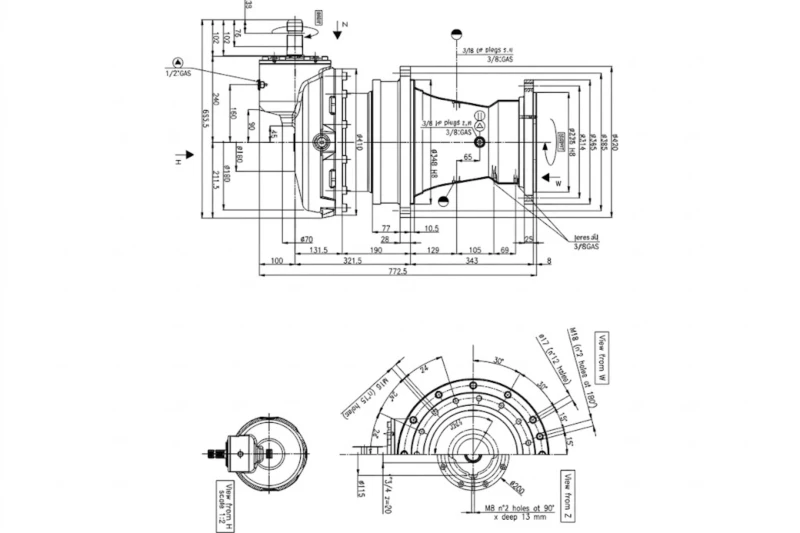
Cross-sectional view highlighting the heavy-duty thrust bearing.
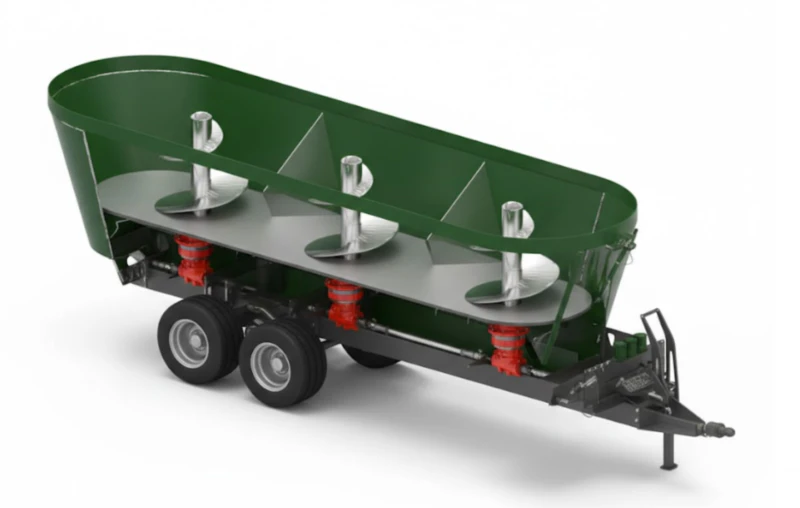
Torque multiplication process via the epicyclic gear arrangement.
4. Global Application Scenarios in Agriculture
Agricultural machinery operates under strict seasonal deadlines and daily feeding schedules. Equipment failure translates directly to decreased milk yields or lower weight gain in livestock. Our transmission components are trusted by mixer manufacturers and large-scale feedlots globally to maintain uninterrupted daily operations.
France: High-Moisture Silage Handling in Brittany
In the dense dairy region of Brittany, France, a cooperative utilizing large 24m³ twin-auger mixers faced chronic drivetrain issues. The high moisture content of the local grass silage created immense drag on the augers, causing competitor gearboxes to overheat and suffer premature input shaft bearing failure. We supplied upgraded planetary units featuring enhanced oil circulation channels and oversized input bearings. The improved heat dissipation and load distribution allowed the French dairy operation to reduce blending times by 15%, handling dense, wet rations without exceeding safe thermal operating limits over a measured 18-month cycle.
United States: Continuous Duty on Texas Beef Feedlots
Commercial feedyards in the Texas Panhandle demand extreme machinery endurance. A major feedlot feeding 40,000 head of cattle required stationary mixing stations running continuously for 12 hours a day. The constant torque load from processing dry hay and grain concentrates required a reduction unit with exceptional fatigue resistance. Our engineering team specified multi-stage planetary drives with deep case-carburized gears reaching HRC 60 hardness. By implementing a forced-oil cooling loop within the stationary setup, these units have consistently logged over 8,000 hours of high-torque mixing with zero gear deformation or unexpected downtime.
Australia: Resisting Abrasive Dust in New South Wales
A large sheep station in New South Wales operated trailed TMR mixers across unpaved, dusty terrain. The highly abrasive silica dust was bypassing the standard input seals of their previous gearboxes, contaminating the gear oil and destroying the sun gears. We retrofitted their fleet with our agricultural series drives equipped with specialized multi-lip Viton cassette seals and protective labyrinth shielding. This sealing technology completely blocked particulate ingress. Maintenance logs showed perfectly clean oil samples at the 1,000-hour service interval, entirely solving the abrasive wear issue in the harsh Outback environment.
5. Interchangeable Dimensional Standards
Agricultural machinery manufacturers standardly design their mixer chassis around established European dimensional profiles. Recognizing the need for immediate aftermarket support and OEM supply chain flexibility, our feed mixer reduction units match universal mounting flanges, output splines, and overall axial heights.
Procurement managers can integrate our units as direct drop-in replacements for major European brands without modifying the mixer tub’s base plate or the central auger shaft. This ensures rapid repair turnaround times during the critical winter feeding season.
| Mixer Capacity Category | Our Equivalent Series | Compatible Industry Replacements |
|---|---|---|
| 5m³ – 12m³ (Single Auger) | VFM-100 Series | Comer PGA 1000 / Brevini ED Series |
| 14m³ – 20m³ (Heavy Single/Twin) | VFM-160 Series | Comer PGA 1600 / Bonfiglioli 300 Series |
| 22m³ – 30m³ (Twin Auger) | VFM-250 Series | Comer PGA 2500 / Reggiana Riduttori RR Series |
| 30m³+ (Triple Auger Heavy Duty) | VFM-350 Series | Comer PGA 3500+ / Custom Integrations |
6. Powertrain Protection: Agricultural PTO Shafts
A high-performance planetary reducer must be protected from catastrophic overloads. When foreign objects like large rocks or dense frozen blocks enter the mixing tub, the auger can jam instantly. If the tractor PTO continues to push power, the extreme kinetic energy will destroy the driveline. To mitigate this risk, the gearbox must be paired with a properly calibrated agricultural PTO shaft featuring an integrated safety mechanism.
We provide heavy-duty PTO drive shafts equipped with shear bolt clutches or friction slip clutches. A shear bolt clutch utilizes a specifically graded bolt designed to snap cleanly under excessive torque, instantly severing the power connection to the mixer. Alternatively, a friction clutch allows the shaft plates to slip against each other when the load exceeds a preset limit, absorbing the kinetic shock without requiring component replacement.
Matching the correct PTO shaft clutch rating to the input capacity of the reduction unit is highly critical for longevity. When you plan to source a heavy-duty Planetary Gearbox for your mixer manufacturing line, integrating the appropriate driveline safety systems ensures the lower powertrain remains structurally sound over years of abusive agricultural use.
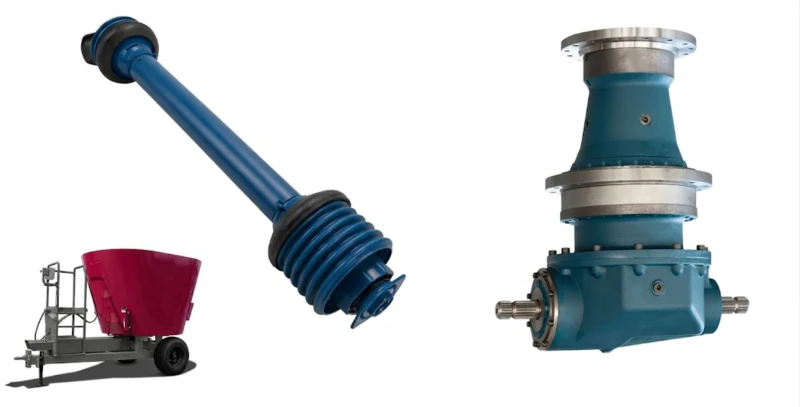
A matched PTO driveline with safety clutch is essential to protect the internal planetary gears.
7. Practical Operation and Maintenance FAQ
1. What is the standard oil change interval for a vertical mixer gearbox?
The initial break-in oil must be drained after the first 50 operating hours to remove normal manufacturing metallic dust. Subsequent oil changes should be performed every 500 working hours or at least once per year before the heavy feeding season.
2. What type of gear oil is required for optimal performance?
We recommend using a high-quality Extreme Pressure (EP) gear lubricant. Typically, an ISO VG 150 or API GL-5 85W-140 mineral or synthetic oil is appropriate, providing the necessary film thickness to protect the gears under shock loads.
3. Why is my planetary gearbox overheating during mixing?
Overheating usually results from overfilling or underfilling the gear oil, processing rations that exceed the machine’s capacity, or operating the tractor PTO at significantly higher RPMs than the mixer was designed to handle.
4. How do the internal thrust bearings support the auger weight?
The upper section of the housing contains a large diameter tapered roller thrust bearing. The output spline shaft transferring power to the auger sits on this bearing, which transfers the downward gravitational force directly to the heavy cast iron housing, protecting the gears below.
5. Can these gear reducers be used in stationary, electrically driven feed mills?
Yes. While heavily used in tractor-pulled mobile mixers, they are easily adapted for stationary use by mating an AC electric motor to the input shaft via a belt drive or direct flexible coupling system.
6. What should I check if the gearbox makes a grinding noise?
Immediately stop operation. Check the oil level and look for metal shavings in the fluid. A grinding noise indicates imminent failure, often due to a collapsed bearing or chipped gear tooth from foreign object ingestion in the mixing tub.
7. How do I match the gearbox input spline to my tractor?
The gearbox input shaft usually has a standard 1-3/8″ 6-spline configuration. You must match your PTO drive shaft yoke to this spline on the implement end, and to your specific tractor output (540 or 1000 RPM) on the tractor end.
8. Are output shaft extensions available for taller auger designs?
Yes, we offer varying output flange bolt patterns and spline lengths to accommodate different mixer floor plate thicknesses and internal auger hub depths.
9. What is the lead time for ordering replacement series components?
Standard interchangeable units mapped to popular European dimensions are typically processed and ready for dispatch within 2-3 weeks, depending on current manufacturing cycles and specific ratio requirements.
10. Do you provide custom gear ratios for OEM manufacturing?
We provide comprehensive OEM support including custom ratio machining. Equipment manufacturers looking to wholesale agricultural Planetary Gearboxes for new mixer models can engage our engineering team to design bespoke reduction ratios optimizing specific auger blade speeds.
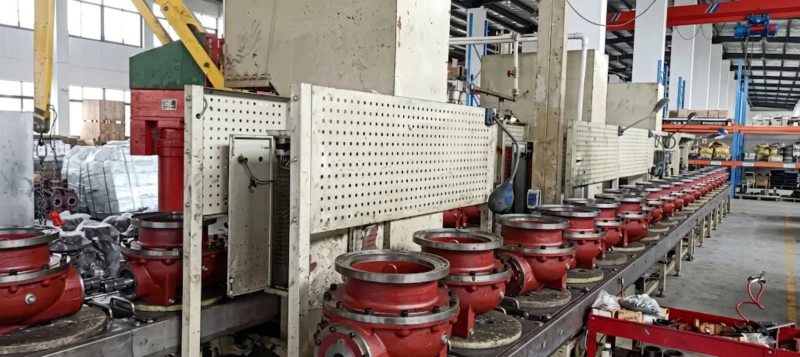
Strict quality control in our advanced machining centers ensures enduring reliability in the field.